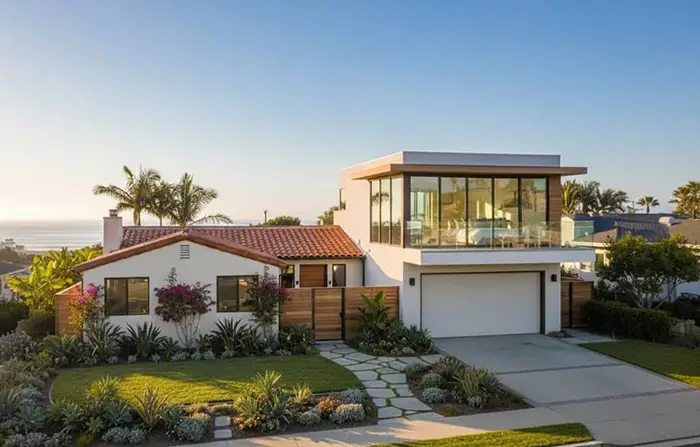
The cost of adding a second story in California typically ranges from $200,000 to $500,000 depending on the size, structural complexity, and existing home conditions.
Adding a second story to a house in California depends on several key factors, including the size of the addition, structural modifications, and design complexity.
On average, homeowners can expect to pay between $200,000 and $500,000 for a full second story addition. Smaller or simpler projects may cost less, while large or highly customized builds can exceed this range.
Typical cost ranges:
Basic second story addition: $200,000 – $300,000.
Mid-range addition: $300,000 – $400,000.
High-end custom addition: $400,000 – $500,000+.
Understanding these cost ranges helps you plan your project more accurately and evaluate what fits your budget and long-term goals.
Second Story Addition Cost Per Square Foot
Cost per square foot is a useful benchmark, but for second story additions it is typically higher than for new construction due to the complexity of working with an existing structure and upgrading its load-bearing capacity.
Typical ranges include:
Basic scope: $250–$325 per sq ft.
Mid-range projects: $325–$425 per sq ft.
High-complexity / custom additions: $425–$500+ per sq ft.
Costs increase when projects require structural reinforcement, reconfiguration of existing layouts, or integration of new systems into older construction.
Second story additions are often more complex and expensive than ground-level expansions because they require major structural changes to your existing home.
Unlike ADUs, which are typically built as separate units, adding a second floor involves reinforcing the foundation, modifying load-bearing walls, and rebuilding the roof — all of which significantly impact the overall cost.
In many cases, homeowners may also need to temporarily relocate during construction, adding indirect costs to the project.
These structural and logistical challenges are the main reasons why second story additions tend to have a higher cost per square foot compared to other types of home expansion.
Key Cost Drivers
Structural reinforcement of the existing foundation.
Roof removal and reconstruction.
Load-bearing wall modifications.
Staircase design and vertical access.
Permit requirements and inspections.
Is a Second Story Addition Worth It?
For many homeowners in California, adding a second story is one of the most effective ways to increase living space without reducing yard area.
While the upfront investment is significant, a second story addition can substantially increase property value, especially in high-demand areas where expanding outward is limited.
It also allows you to redesign your home layout, add bedrooms or bathrooms, and improve overall functionality without relocating.
However, the right choice depends on your long-term plans, budget, and the condition of your existing home. In some cases, alternatives like ADUs or ground-level extensions may be more suitable.
Understanding both the investment and the long-term benefits is key to making the right decision for your property.
Key Benefits
Increase living space without expanding your footprint.
Boost property value in high-demand areas.
Customize your home layout for long-term needs.
Avoid the cost and stress of moving.
How to Plan Your Budget for a Second Story Addition
Planning your budget for a second story addition requires more than just estimating construction costs. It’s important to account for both expected expenses and potential hidden costs that may arise during the project.
Beyond construction, homeowners should consider design fees, engineering work, permits, and temporary living arrangements if relocation is required during the build.
Setting a realistic budget with a contingency of 10–20% helps avoid unexpected financial stress and keeps the project on track.
Working with an experienced team early in the process can also help identify potential challenges and optimize your budget before construction begins.
How much does it cost to add a second story in California?
The cost of adding a second story in California typically ranges from $200,000 to $500,000 depending on size, structural requirements, and design complexity.
What is the average cost per square foot for a second story addition?
Most projects range from $200 to $400 per square foot, depending on materials, layout, and the level of structural work required.
Why is adding a second story so expensive?
Second story additions require major structural modifications, including reinforcing the foundation, modifying load-bearing walls, and rebuilding the roof, which significantly increases overall costs.
Do I need to move out during construction?
In many cases, yes. Because construction affects the entire structure of the home, temporary relocation may be necessary for safety and convenience.
How long does a second story addition take?
A typical project can take anywhere from 4 to 8 months, depending on design, permitting, and construction complexity.
Can a second story increase home value?
Yes, adding a second story can significantly increase property value, especially in areas where expanding outward is limited and additional living space is in high demand.