Smart Home Features to Include When Building a New House in California
Feb 19, 2026 | Last Updated: Feb 20, 2026- 0 Comments
Building a custom home in California in 2026 is no longer just about aesthetics, square footage, or luxury finishes. Today’s homeowners must also consider performance, resilience, energy compliance, and long-term adaptability.
Smart home technology has become an essential part of modern residential design-build projects — especially in California, where building codes, wildfire conditions, and energy costs demand a higher standard of planning.
Below are the most impactful smart systems to integrate during the design and construction phase, when they can be engineered seamlessly into the home’s infrastructure.
1. Smart Energy Systems Designed for Title 24 Compliance
California’s Title 24 Energy Standards continue to evolve, requiring new homes to meet strict benchmarks for energy efficiency and electrification.
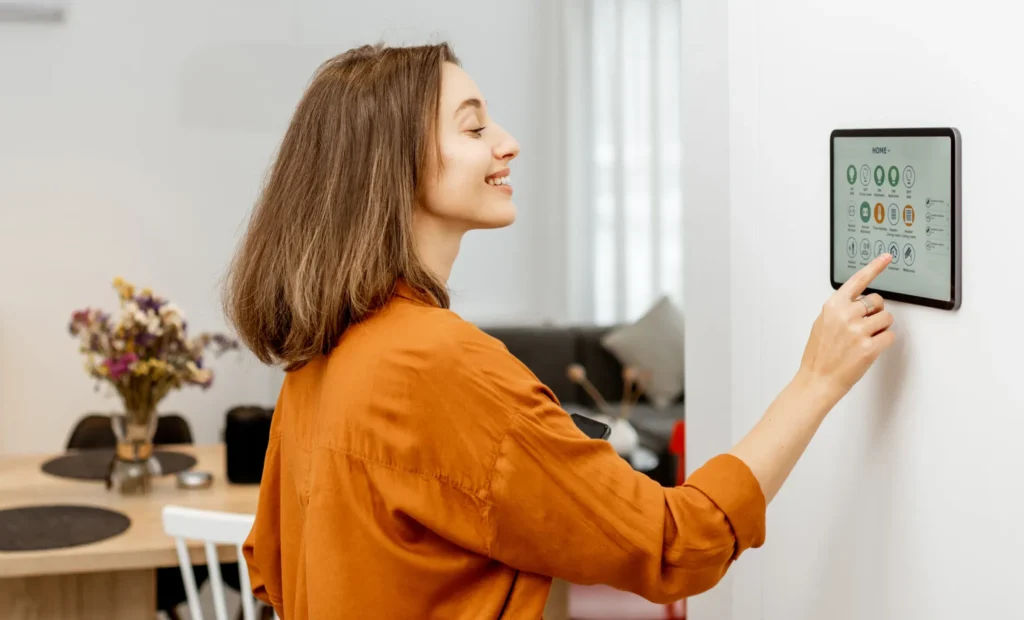
Beyond basic smart thermostats, advanced homes in 2026 increasingly incorporate:
- AI-driven HVAC zoning systems.
- Predictive energy optimization based on occupancy.
- Automated peak-load reduction strategies.
- Real-time consumption dashboards.
When integrated early, these systems not only reduce utility costs but also support smoother permitting and compliance documentation.
2. Solar + Battery Storage as a Standard, Not an Upgrade
In California, solar is no longer a luxury add-on — it is often a baseline expectation.
However, the true future-proof investment is solar paired with battery storage, especially in regions affected by Public Safety Power Shutoffs (PSPS).
Key design considerations include:
- Roof orientation optimized for solar yield.
- Pre-planned conduit pathways.
- Load prioritization during outages.
- Battery placement meeting fire setback requirements.
A properly engineered solar + storage system improves both resilience and resale value.
3. Wildfire-Responsive Smart Safety Infrastructure
With wildfire risk shaping residential construction across Los Angeles, Malibu, and hillside communities, smart fire protection systems are becoming increasingly relevant.
High-performance homes may include:
- Smart ember intrusion sensors at vent points
- Automated perimeter irrigation activation
- Remote monitoring smoke/heat detection networks
- Integration with emergency response alerts
These technologies complement fire-resistant assemblies required in WUI (Wildland-Urban Interface) zones.
4. Integrated Security Architecture Beyond Consumer Devices
Modern custom homes require security systems that are architecturally integrated — not added as afterthoughts.
Professional-grade solutions often include:
- Multi-zone surveillance with concealed camera placement
- Smart access control with temporary credentialing
- Perimeter motion + lighting automation
- Gate systems integrated into home control hubs
Design-build coordination ensures security infrastructure remains discreet while meeting high-end expectations.
5. Water Conservation + Smart Leak Mitigation
With drought regulations and rising water costs, smart water systems are increasingly prioritized in California residential builds.
Advanced plumbing strategies include:
- Whole-home leak detection with automatic shutoff valves.
- Smart irrigation tied to weather forecasting.
- Greywater-ready plumbing layouts.
- Usage monitoring for sustainability reporting.
Early integration reduces future retrofit complexity and protects against catastrophic water damage.
6. Architectural Lighting Automation as a Design Element
Lighting is no longer just functional — it defines spatial experience.
Smart lighting design in 2026 often includes:
- Circadian lighting systems supporting wellness.
- Scene-based architectural layering (task, ambient, accent).
- Daylight-responsive dimming controls.
- Integration with shading and glazing strategy.
When planned correctly, lighting becomes part of the home’s architectural identity.
7. Whole-Home Automation Infrastructure Planning
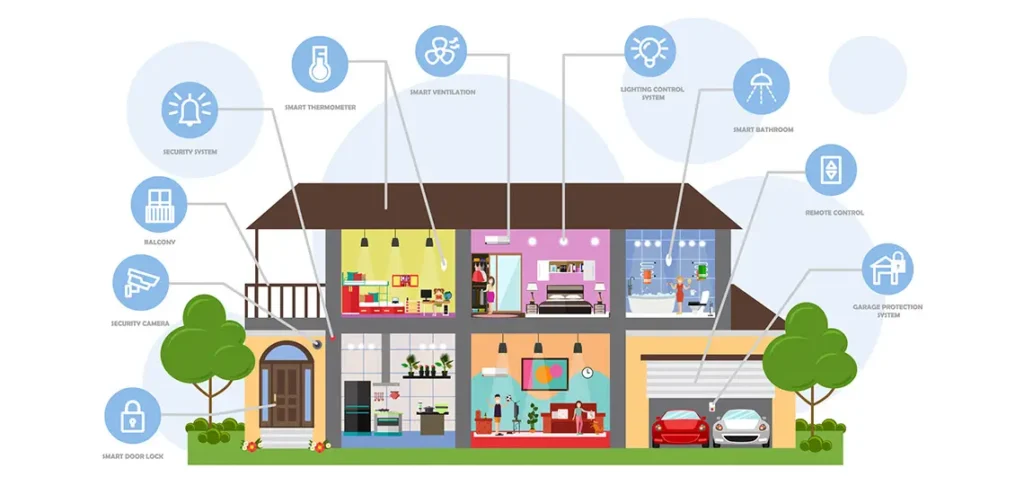
The most common mistake homeowners make is treating smart technology as a collection of gadgets rather than an integrated system.
A true smart home requires structured infrastructure:
- Centralized low-voltage wiring.
- Equipment rooms with ventilation planning.
- Unified control platforms (Lutron, Control4, Crestron, etc.).
- Scalable systems for future upgrades.
Designing this backbone during construction is significantly more efficient than retrofitting after completion.
Smart Homes Are Performance Homes
In California’s 2026 residential market, smart home technology is not simply about convenience — it is about building homes that are:
- energy-compliant;
- wildfire-resilient;
- water-efficient;
- secure;
- adaptable for decades.
The best smart homes are not the ones with the most devices, but the ones where technology is thoughtfully integrated into architecture and engineering from the start.
For homeowners planning a custom build, working with an experienced design-build team ensures that smart systems enhance the home’s performance rather than complicate it.